
Teacher Residency
A one-year, practice-based teacher preparation program for aspiring educators.
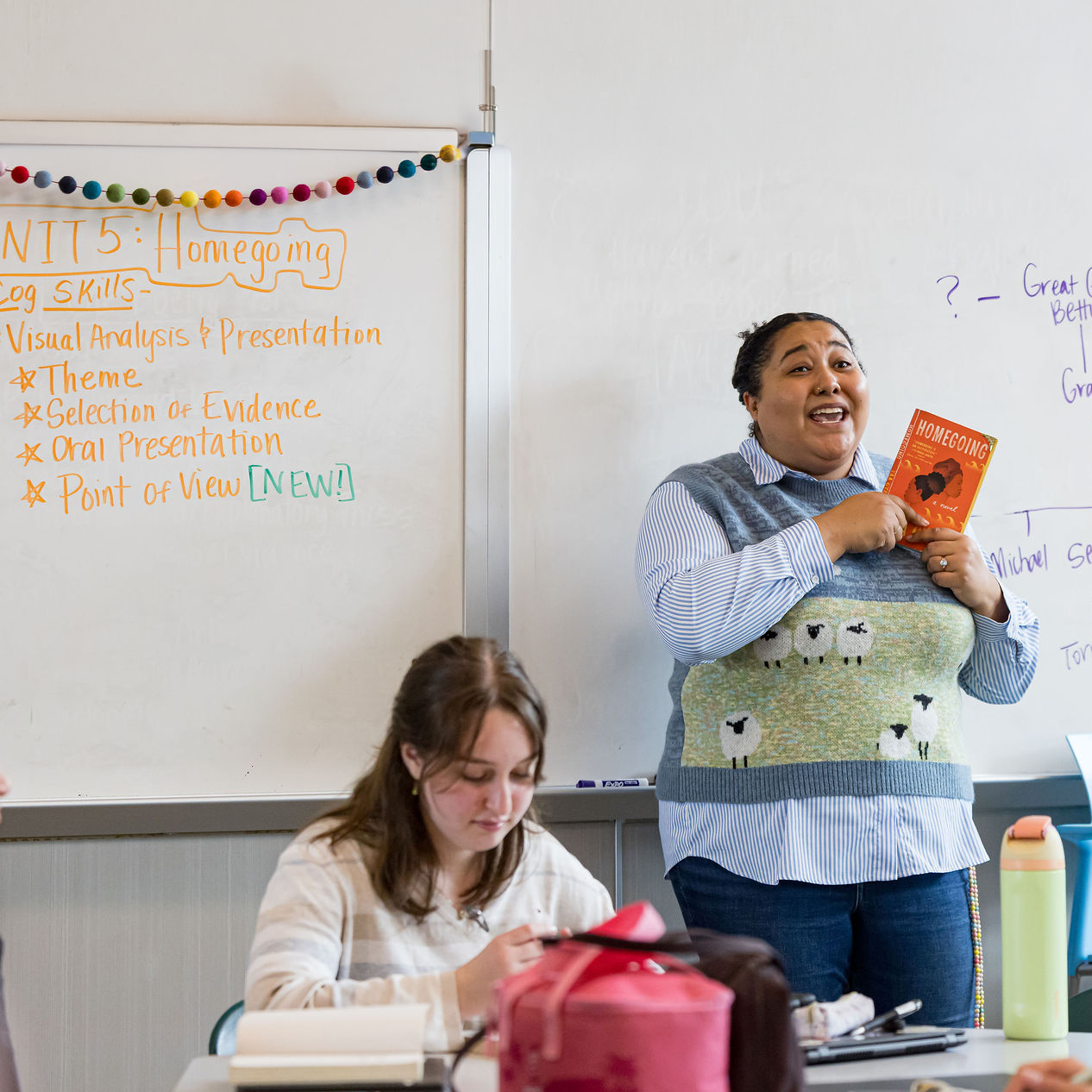
Residents work alongside experienced educators, build real classroom experience, and receive the support needed to grow into a powerful teacher. The program offers California Preliminary Teaching Credentials in:
- Single Subject Teaching
- Multiple Subjects Teaching
- Education Specialist Instruction
Marshall Teacher Residency is based in the San Francisco Bay Area and partners with schools throughout California. Designed in partnership with experts from Stanford University and born out of Summit Public Schools, the residency prepares new educators for the real demands of teaching in diverse classrooms.
Residents receive affordable tuition, a living stipend, and access to state grants and other financial aid options that can help cover tuition. Graduates also receive priority hiring consideration with more than 20 California districts and public charter networks.
In addition to accreditation through the California Commission on Teacher Credentialing, Marshall Teacher Residency received initial accreditation in May 2026 and is a member in good standing of the Association for Advancing Quality in Educator Preparation (AAQEP), a national accrediting organization recognized by the Council for Higher Education Accreditation. AAQEP accreditation affirms that a program prepares effective educators who continue to grow as professionals and that the program has demonstrated the commitment and capacity to maintain quality.
About the Program
Prepare to teach through practice, mentorship, and community.
The Teacher Residency gives aspiring California teachers a one-year path to a California Preliminary Teaching Credential.
Developed in partnership with the Stanford Center for Assessment, Learning and Equity, the residency places hands-on practice, data-informed learning, collaboration, and mentorship at the center of the year. Residents complete well over 1,000 clinical hours, far above the California Commission on Teacher Credentialing requirement of 600 clinical hours.
By the end of the program, Residents have experienced the full arc of teaching: planning, instruction, assessment, mentoring, family communication, collaboration with colleagues, and independent teaching.
School partners overwhelmingly hire Marshall Residents into their classrooms, and 100% of school leaders who host Marshall Residents report confidence in their abilities as first-year teachers.
Applicants to the Teacher residency must:
- Possess a Bachelor’s degree from a regionally accredited college or university
- Be eligible to work in the United States
- Be committed to teaching elementary students, middle / high school students, and/or students with disabilities
Important Information
- Early application deadline: November 6, 2026
- Regular application deadline: February 5, 2027
- Sign up for an information session
- Read the Supplemental Information & Application Guide
- Ready to apply? Start your application.
Program Values
Residents experience Marshall’s values-based approach to teaching and learning before applying it in their own classrooms.
From coursework and clinical practice to mentorship and partner school placements, these beliefs shape the Resident experience.
Student-centered instruction
We believe students should be active agents in their learning. Residents learn to build classrooms that support student agency, self-efficacy, academic growth, and strong habits for success.
Data-informed instruction
Residents learn to use evidence of student learning to plan instruction, respond to student needs, and create appropriately rigorous learning experiences for diverse classrooms.
Whole-child education
Residents learn to build strong relationships and support students' academic, social, and emotional development. Teaching is not only about content. It is also about knowing students as whole people in order to help them grow.
Anti-racist education
Residents engage in self-reflection, culturally responsive teaching methods, and examination of inequities in the education system. They learn to build classrooms where students are seen, supported, and challenged.
Program PILLARS
The Teacher Residency is grounded in three integrated dimensions of educator preparation: immersive classroom practice, values-driven instruction, and a connected culture of mentorship and collaboration.
Working in concert, these pillars ensure Residents bridge pedagogical theory, clinical experience, and reflection to meet the actual needs of students.
Classroom Immersion
As a Resident, you spend 6–8 hours per day, four days per week, in a classroom across a full school year.
With consistent coaching from a Cooperating Teacher, you grow from observation to co-teaching to leading instruction. You experience every part of the teacher role, including planning, teaching, assessing, mentoring, communicating with families, and collaborating with colleagues.
Values-aligned instruction
You begin the program with a summer intensive and continue coursework one and half days per week throughout the school year.
Led by expert faculty, coursework is project-based and integrated with clinical experience. You learn theory and immediately connect it to what is happening in classrooms. Coursework reflects Marshall's core commitments to student-centered instruction, data-informed practice, whole-child education, and anti-racist teaching.
Mentoring and Collaboration
You receive multiple layers of support, including one-on-one mentoring, in-classroom coaching, and a connected cohort community.
You examine how coursework connects to clinical practice, receive personalized support through coaching and mentorship, and learn from peers placed across different school sites. The residency is demanding, and Residents leverage each other for support during the Residency year and beyond.
“I feel there is a clear air of passion and excitement about the work that definitely keeps us going when things get tough… There is a great balance of flexibility on behalf of the faculty, and I think outside of projects and resources, I’ve gained the most from the interactions and guidance from the Marshall team. Supervisory is definitely one of my favorite parts of the week and something I look forward to as a space to decompress, commiserate and share joy with others in similar positions.”
– Christian Cayton, English Teacher, Ednovate Charter Schools
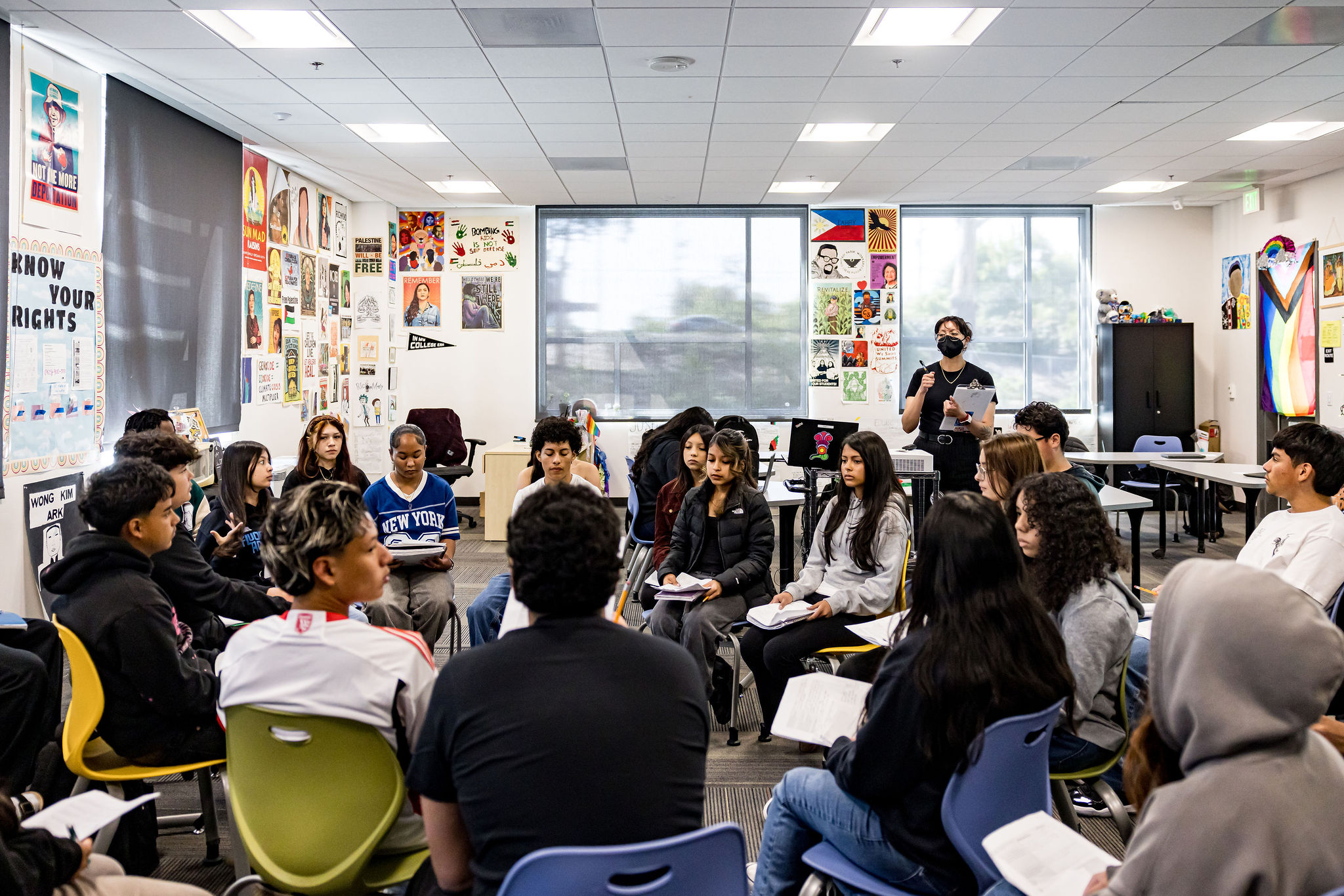
Marshall Teacher Residency builds a diverse community of aspiring educators.
Close to half of Marshall Residents are first-generation college graduates, and nearly as many live in or are already connected to the school communities they serve as alumni, former staff, or parents. Meet some of our Residents and learn about their journeys into teaching.
Meet Tilar
Elementary Resident
Tilar pursued a Multiple Subjects credential after discovering her interest in teaching while caring for her younger siblings. She completed her residency year in a Kindergarten classroom at New School of San Francisco.
Meet Hannah
Education Specialist Resident
Hannah found her passion working with students with disabilities, though she never expected to become a teacher. As an Education Specialist Resident, she completed her residency year at Summit Preparatory Charter High School in Redwood City.
Meet Devonna
Math Resident
Devonna found her passion for teaching during her undergraduate studies at Cal Poly Pomona. After a year as a tutor at Summit Tahoma, she joined the first cohort of the Teacher Residency. She became a Math Teacher at Summit Tahoma, later hosted her own Resident as a Cooperating Teacher, and ultimately moved into school leadership.
Meet Edwin
Spanish Resident
Edwin joined the Teacher Residency after seeing the limits of traditional educational models and wanting to meet the needs of individual students more effectively. He completed his residency at Summit Shasta and now teaches Spanish in his Southern California hometown.
Meet April
History Resident
The Residency program was an opportunity for April to follow a path towards their professional goals and learn essential teaching skills through a personalized learning model and with a highly effective Cooperating Teacher. April was a Resident at Summit Rainier and taught History at Summit Tahoma in San Jose, California, for five years.
Meet Eric
English Resident
Before becoming a teacher, Eric was a writer in Los Angeles. He completed his residency year at Summit Shasta, taught creative writing and journalism through Summit's Expeditions program, and later moved into school leadership as a Dean of Expeditions.
Credentialing options
Elementary School: Multiple Subject Credential
The Career
Elementary teachers facilitate learning for the same group of students throughout the day and teach a broad range of subjects. They support academic growth, social-emotional development, and a love of learning for students ages 4–11.
Coursework
Residents build knowledge in early childhood development and learn how to support students’ foundational academic and social-emotional skills.
They practice planning and instruction across content areas, with particular attention to literacy and math. Residents also gain experience with interdisciplinary teaching and the integration of history, science, health, physical education, and performing arts into the curriculum.
Placement
Residents spend their full-year clinical placement in an elementary classroom working alongside an experienced teacher.
During the fall semester, Residents also spend 3–5 hours per week in a secondary classroom placement at the same school, two to three grade levels apart from their primary placement. This gives Residents experience with both upper and lower elementary grades.
Independent teaching
Residents complete at least four weeks of independent student teaching in their primary placement classroom. During this time, Residents serve as lead teachers responsible for planning, instruction, assessment, and communication with families.
Middle and High School: Single Subject Credential
The Career
Middle and high school teachers specialize in a content area, such as math, science, English, history, or world language. They work with multiple student groups each day, typically serving students ages 11–18.
Coursework
Residents build knowledge in adolescent development and learn how to support students preparing for college, career, and life beyond school.
They practice core pedagogy for their credential subject area and study theory and best practices for engaging adolescents. Residents learn how to hold rigorous expectations while supporting diverse learners, including students with disabilities, English learners, and students developing literacy or academic language.
Placement
Residents spend their full-year clinical placement in a middle or high school classroom working alongside an experienced teacher in the same credential subject area.
Most placements allow Residents to teach one to two different courses or grade levels in the same subject. Residents pursuing dual credentials observe and co-teach in a second classroom.
Independent teaching
Residents complete independent student teaching from January through June for at least one class block with a consistent student group. They continue co-teaching with their Cooperating Teacher for the remainder of the school day.
Special Education: Education Specialist Credential
The Career
Education Specialists work with diverse learners, families, and service providers to determine and deliver the support students need to succeed in general education settings.
Coursework
Education Specialist Residents complete foundational coursework alongside general education Residents, building teaching practices that apply across general and special education settings.
They also complete specialized coursework focused on typical and atypical neurodevelopment, academic and behavioral support for students with disabilities, case management, collaboration, and advocacy.
The Education Specialist pathway has multiple entry points. Residents who enter with a general education teaching credential or transfer from the general education residency program complete an accelerated pathway based on remaining requirements.
Placement
Residents are placed with an experienced Education Specialist for the full year. They experience the various responsibilities of the role, including co-teaching, small-group instruction, and case management.
In the fall semester, Residents observe and co-teach in general education classrooms and in a range of non-traditional educational settings.
Independent teaching
Residents take full responsibility for providing services to a caseload of students with diverse ages, backgrounds, and needs, including students with autism. This includes providing support, monitoring progress, collaborating with families and service providers, and administering assessments and evaluations.
“The core beliefs of Marshall Teacher Residency are easily seen throughout all of the assignments that we have had and I find myself constantly thinking about how I can include these beliefs in my planning and in my everyday interactions with the students.”
– Katelaine Rojas, History Teacher, Lindsay Unified School District
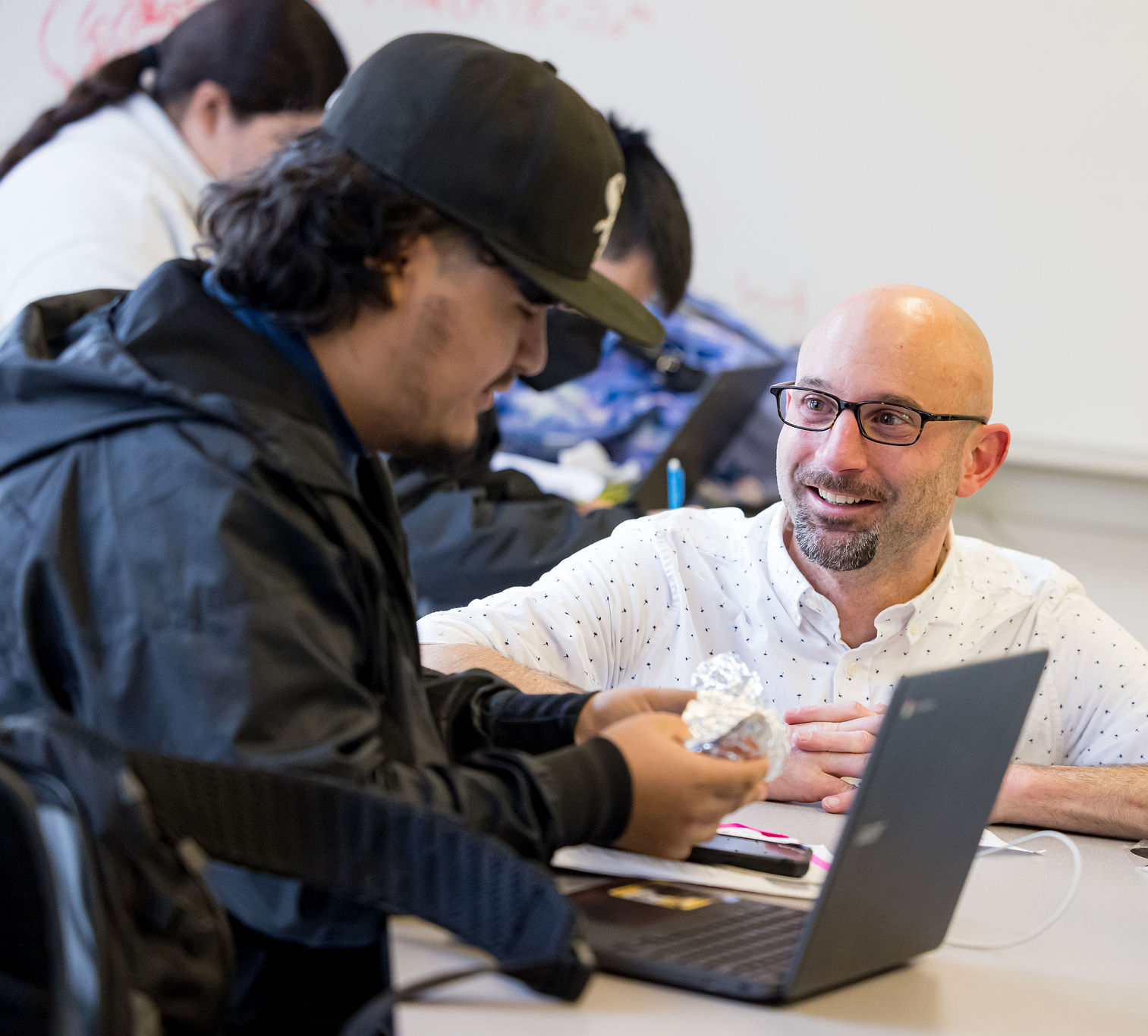
Building a More Representative Teacher Bench
In 2026–27, 76% of Marshall Residents identified as people of color, compared with 21% of teachers nationwide. Marshall's work is part of a larger effort to build educator pipelines that more closely reflect the students and families in school communities.
Priority Subject Areas
California continues to face teacher shortages in mathematics, science, and special education. Marshall Teacher Residency is prioritizing candidates with backgrounds or interest in these credential areas.
Finances and Testing
Marshall Teacher Residency is designed to make the path into teaching more accessible. Residents receive affordable tuition, a living stipend, and access to state grants and other financial aid options that may help cover tuition. Testing and credentialing requirements vary by pathway.
How to Apply
Marshall Teacher Residency welcomes aspiring educators ready to prepare for teaching through practice, mentorship, and community. We look for Residents who believe that all students can be successful, are committed to learning and growing as anti-racist educators, and have a growth mindset.
Before applying, we strongly recommend that applicants attend a virtual information session and read the Teacher Residency Supplemental Information & Application Guide for more information on the program.
We also encourage all interested applicants to follow us on LinkedIn and Instagram to stay on top of program tips, deadlines, and other information.